
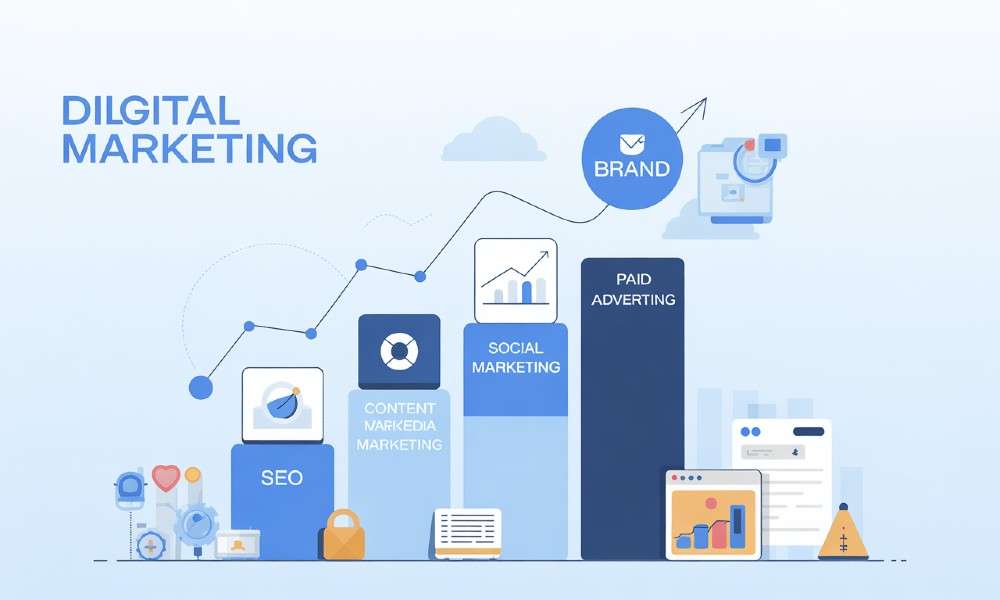
In today’s highly competitive digital landscape, businesses cannot rely on a single marketing channel to grow their brand. Consumers interact with brands across multiple platforms, search engines, social media, websites, and email, before making a purchase decision. To achieve long-term success, businesses need a strong, well-structured digital marketing strategy built on core foundations.
These foundations are commonly referred to as the four pillars of digital marketing. When implemented correctly, they work together to improve brand visibility, attract the right audience, and convert prospects into loyal customers.
This blog explores the four pillars of digital marketing for brand success, explains their importance, and shows how businesses can leverage them effectively.
1. Search Engine Optimization (SEO)
Search Engine Optimization (SEO) is the backbone of digital marketing. It is aimed at enhancing a website’s presence across major search platforms, including Google, Bing, and other popular search engines. When potential customers search for products or services online, SEO ensures your brand appears at the top of search results.
Why SEO Is Important for Brand Success
SEO helps businesses:
- Increase organic website traffic
- Build trust and credibility
- Improve brand awareness
- Generate high-quality leads
- Reduce dependency on paid advertising
Unlike paid ads, SEO provides long-term results. A properly optimized website can deliver consistent traffic and lead generation over an extended period.
Key Components of SEO
Effective SEO includes multiple elements:
- On-page SEO: Refining on-page elements such as website copy, meta titles, descriptions, headings, and visual assets.
- Technical SEO: Enhancing website loading speed, ensuring mobile compatibility, and making it easier for search engines to access pages.
- Off-page SEO: Building high-quality backlinks from authoritative websites
- Local SEO: Optimizing Google Business Profile and local citations for location-based searches
By focusing on SEO, brands position themselves as reliable sources of information and solutions, which plays a crucial role in building long-term customer trust.
2. Content Marketing
Content marketing is the heart of digital marketing. It centers on producing and sharing meaningful, relevant, and consistent content that captures the attention of a specific audience. Content educates users, answers their questions, and guides them through the buyer’s journey.
Role of Content Marketing in Brand Building
Strong content marketing helps brands:
- Establish authority in their industry
- Educate potential customers
- Increase website engagement
- Support SEO efforts
- Improve conversion rates
Consumers prefer brands that provide helpful information rather than direct sales messages. High-quality content creates a connection between the brand and its audience.
Types of Content Used in Digital Marketing
Content can be delivered in many formats, such as:
- Blog posts and articles
- Website landing pages
- Social media posts
- Case studies and success stories
- Info graphics and visual content
- Videos and reels
Consistent and informative content ensures your brand stays relevant and top-of-mind for your audience.
3. Social Media Marketing
Social media marketing focuses on building a brand’s presence on platforms such as Facebook, Instagram, LinkedIn, Twitter, and YouTube. It allows brands to connect directly with their audience, share content, and promote products or services.
Why Social Media Is a Core Digital Marketing Pillar
Social media marketing enables businesses to:
- Increase brand awareness
- Build customer relationships
- Engage with followers in real time
- Drive traffic to websites
- Generate leads through organic and paid campaigns
With billions of users worldwide, social media platforms offer unmatched reach and targeting options.
Key Social Media Marketing Strategies
Successful social media marketing includes:
- Posting consistent and engaging content
- Using visuals, reels, and short videos
- Running targeted paid advertising campaigns
- Responding to comments and messages
- Analyzing performance metrics to optimize campaigns
Social media humanizes a brand by showcasing its personality, values, and customer interactions.
4. Paid Advertising (PPC & Performance Marketing)
Paid advertising, also known as Pay-Per-Click (PPC) or performance marketing, delivers immediate results by placing ads in front of a targeted audience. Platforms like Google Ads, Facebook Ads, Instagram Ads, and LinkedIn Ads allow brands to reach users based on demographics, interests, behavior, and search intent.
Importance of Paid Advertising for Brand Growth
Paid advertising helps businesses:
- Gain instant visibility
- Drive targeted traffic
- Promote offers and campaigns
- Increase sales and conversions
- Test new markets quickly
While SEO and content take time, paid ads provide faster outcomes and measurable ROI.
Types of Paid Advertising Channels
Popular paid advertising formats include:
- Search ads on Google
- Display ads on websites and apps
- Social media ads
- Video ads on YouTube
- Remarketing and retargeting ads
When combined with strong landing pages and conversion tracking, paid advertising becomes a powerful revenue-driving tool.
How the 4 Pillars Work Together?
The true power of digital marketing lies in integrating all four pillars into a unified strategy.
- SEO drives long-term organic traffic
- Content marketing educates and engages users
- Social media marketing amplifies content and builds relationships
- Paid advertising accelerates growth and conversions
For example, a blog optimized for SEO can be promoted on social media and boosted with paid ads to reach a wider audience. This multi-channel approach ensures consistent brand messaging and maximum impact.
Wrapping Up
The four pillars of digital marketing, SEO, content marketing, social media marketing, and paid advertising, are essential for building a successful and sustainable brand. Each pillar serves a unique purpose, but together they create a powerful marketing ecosystem.
Businesses that invest in all four pillars gain better visibility, stronger customer engagement, and higher conversion rates. In an ever-evolving digital world, brands that adapt and optimize these pillars will stay ahead of the competition and achieve long-term success.
If your goal is to grow your brand online, focusing on these four digital marketing pillars is not optional, it’s essential.
Don't Miss: What Is Search Intent and Why It’s Crucial for SEO Success?


