
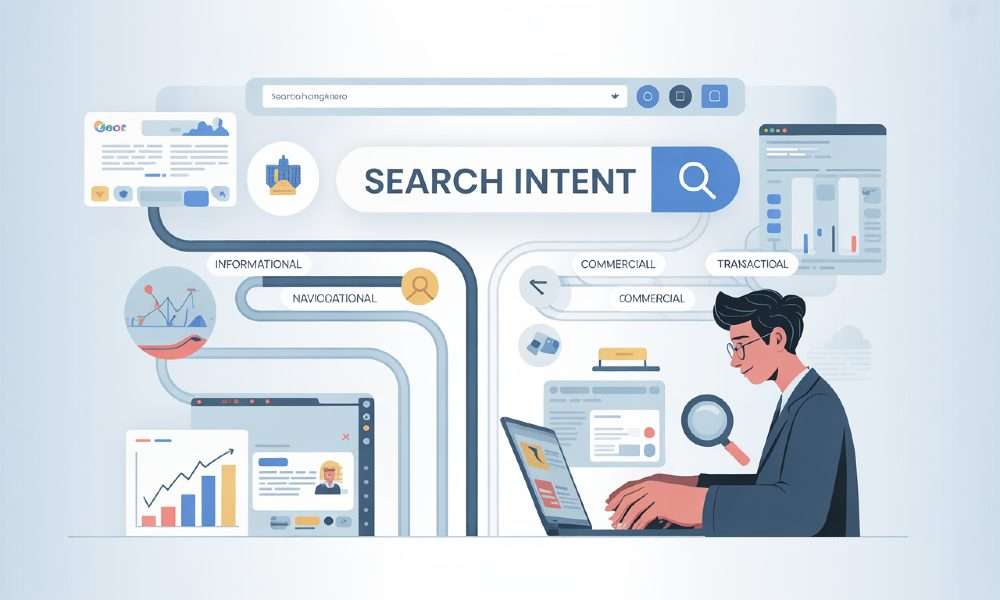
Search engine optimization (SEO) has progressed well beyond simple keyword placement and backlink building. Today, understanding search intent is the foundation of ranking, conversions, and long-term organic growth. If your content doesn’t match what users actually want, Google won’t rank it, no matter how well it’s optimized.
In this guide, we’ll explain what search intent are, its types, real examples, and why it’s critical for SEO success in 2025 and beyond.
What is Search Intent?
Search intent refers to the underlying purpose behind a user’s search query. It answers the question:
“What is the user actually trying to achieve?”
When someone types a query into Google, they may want:
- Information
- A specific website
- A comparison
- To make a purchase
Google’s goal is to deliver results that best satisfy that intent, not just match keywords.
Why Search Intent Matters More Than Keywords
In earlier SEO days, ranking was about keyword repetition. Today, Google uses:
- AI (RankBrain, BERT, Helpful Content System)
- User behavior signals
- Content relevance and depth
If your page targets the wrong intent:
- Bounce rate increases
- Time on page drops
- Rankings fall
Matching intent = higher rankings, better engagement, more conversions.
The 4 Main Types of Search Intent
1. Informational Intent
The user wants to learn something.
Examples:
- “What is search intent”
- “How does SEO work”
- “Benefits of solar panels”
Best content formats:
- Blog posts
- Guides
- FAQs
- Explainers
SEO Tip: Use headings, bullet points, schema, and simple language for featured snippets.
2. Navigational Intent
The user intends to access a specific brand or website.
Examples:
- “Google Search Console login”
- “Wedding Caterers contact number”
- “Vinayak Furniture website”
Best content formats:
- Brand pages
- Homepage
- Contact pages
SEO Tip: Ensure your brand name, meta titles, and sitelinks are optimized.
3. Commercial Investigation Intent
The user is researching before buying.
Examples:
- “Best solar panels in India”
- “SEO vs Google Ads”
- “Modular kitchen price comparison”
Best content formats:
- Comparison blogs
- Listicles
- Case studies
- Reviews
SEO Tip: Include pros & cons, pricing ranges, testimonials, and internal links to services.
4. Transactional Intent
The user is ready to take action.
Examples:
- “Buy solar inverter near me”
- “Hire SEO agency in Ahmedabad”
- “Book catering service for wedding”
Best content formats:
- Service pages
- Landing pages
- Product pages
SEO Tip: Add strong CTAs, trust signals, contact buttons, and fast-loading pages.
How Google Identifies Search Intent
Google analyzes:
- Query words (“buy”, “how”, “best”, “near me”)
- Previous user behavior
- SERP features (ads, videos, snippets)
Location and device
Pro tip: Always search your target keyword on Google and study:
- Top 10 results
- Page format
- Content length
- Search features displayed
That SERP defines the intent.
Search Intent + SEO = Higher Rankings
Here’s how aligning intent improves SEO performance:
| SEO Factor | Impact of Matching Intent |
| CTR | Higher |
| Bounce Rate | Lower |
| Dwell Time | Longer |
| Conversions | Increased |
| Google Rankings | Improved |
Google rewards content that solves the user’s problem completely.
How to Optimize Content for Search Intent
Step 1: Analyze the Keyword
Check:
- Action words (buy, learn, compare)
- Location modifiers
- Price-related terms
Step 2: Map Keywords to Intent
Create separate pages for:
- Blog content (informational)
- Service pages (transactional)
- Comparison articles (commercial)
Step 3: Match Content Format
If top results are:
- Blogs → Write a blog
- Product pages → Create a landing page
- Videos → Add video content
Step 4: Optimize for AEO & GEO
- Answer questions directly
- Use short, clear paragraphs
- Add FAQs and schema markup
- Write in a conversational tone
Search Intent in the Age of AEO & Generative SEO
With AI search engines and generative results, content must:
- Provide clear answers
- Be structured and authoritative
- Satisfy intent quickly
Search intent is now the bridge between SEO, AEO, and GEO.
If your content answers the right question the right way, AI engines will surface it.
Common Search Intent Mistakes to Avoid
? Targeting transactional keywords with blogs
? Writing long articles for “buy now” searches
? Ignoring local intent (“near me”, city-based)
? Keyword stuffing without solving the problem
Final Thoughts
Search intent is no longer optional; it’s the core of SEO success.
- If you want:
- Higher rankings
- Better leads
- More sales
You must stop optimizing for keywords alone and start optimizing for user intent.
SEO success = Right intent + Right content + Right optimization
Don't Miss: Conversion Funnel Optimization 5 Simple Ways to Boost Sales


